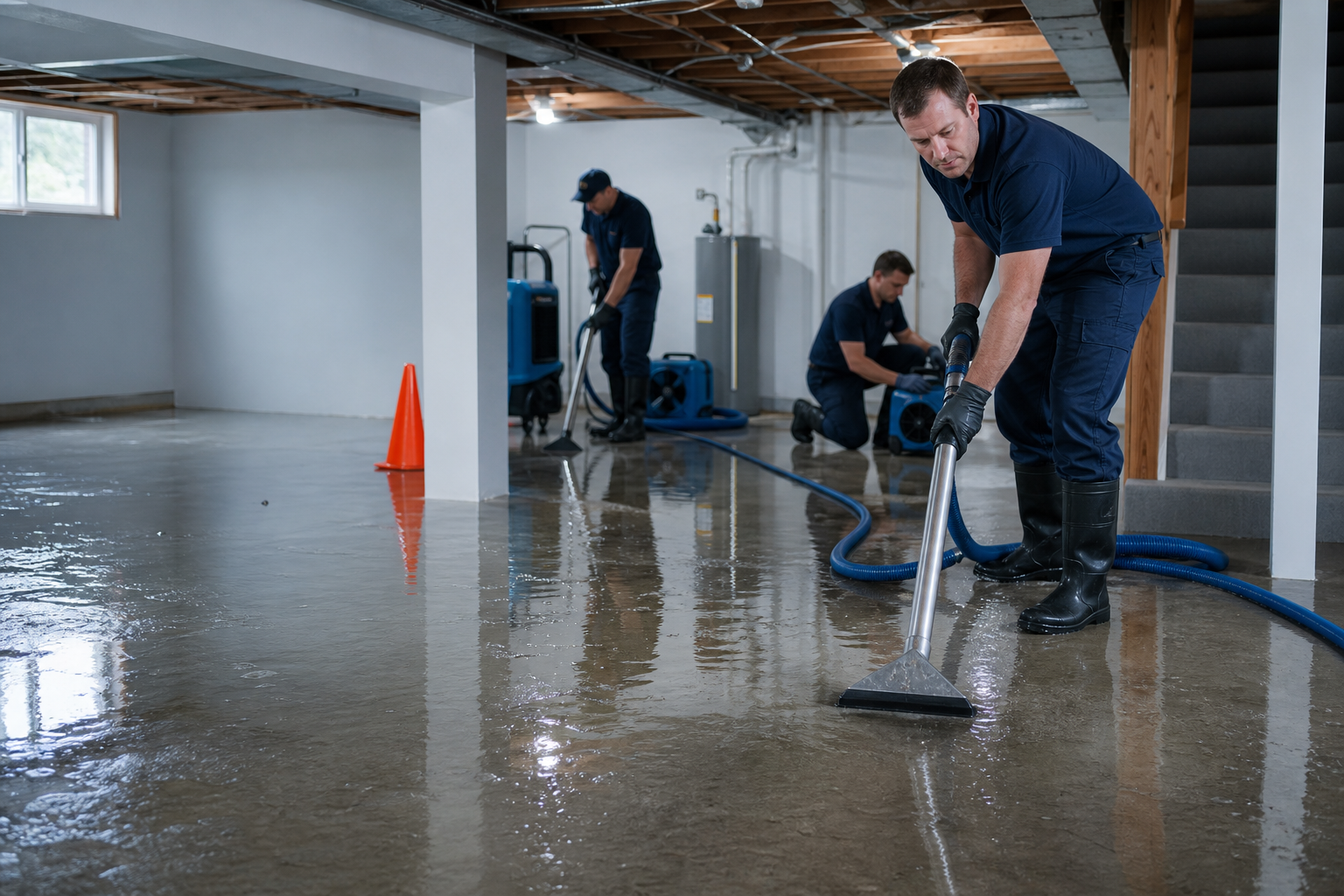
When a basement floods or a pipe breaks, the first few hours determine how much of the building can be saved. A strong Dayton restoration response starts with a sequence of controlled decisions: identify the source, stabilize safety conditions, remove standing water, map the moisture, dry the structure, protect indoor air, and document every major step. That process matters because water rarely stays where it is first visible. It can run under baseboards, wick into drywall, collect beneath carpet pad, enter wall cavities, and hold against framing long after the floor looks dry. A fast response reduces demolition, limits odor, and lowers the chance that a water loss becomes a mold remediation project.
Water extraction is the emergency phase. The goal is to remove as much bulk water as possible before it spreads deeper into porous materials. In Dayton homes, that may mean pumping out a finished basement after heavy rain, extracting carpet after a washing machine overflow, or removing water from concrete, vinyl plank, tile, and commercial flooring after a supply line failure. Extraction is not just about speed; it is about choosing the right tool for the material. Carpet, pad, baseboards, cabinets, and contents all respond differently to saturation. A professional crew separates salvageable materials from items that are contaminated, delaminated, or too wet to dry safely.
After standing water is removed, structural drying begins. This is where many poor restoration jobs fall apart, because a space can look normal while hidden materials remain wet. Structural drying uses air movement, dehumidification, temperature control, and repeated moisture readings to bring affected materials back toward a dry standard. Air movers help evaporate moisture from surfaces, while dehumidifiers remove that moisture from the air so it does not settle back into drywall, wood, or insulation. The drying plan should change as the building responds. If humidity remains high, if a wall cavity stays wet, or if flooring traps moisture below the surface, the setup needs to be adjusted rather than left to run blindly.
Dayton properties create specific drying challenges. Older basements may have porous block walls, wood paneling, older insulation, or previous water staining that hides a new moisture boundary. Newer homes in Kettering, Beavercreek, Huber Heights, and nearby suburbs often include finished lower levels where water can move beneath flooring systems before anyone sees a stain. Commercial property managers face another layer of complexity: tenant access, electrical rooms, mechanical spaces, common hallways, and insurance documentation all have to be managed while the building is being dried. The best partner builds drying plans around the property type, the water source, and the materials actually affected.
Moisture mapping is the quality-control backbone of structural drying. Technicians use moisture meters, thermal imaging as appropriate, humidity readings, and daily equipment checks to understand what is wet and whether conditions are improving. The map may include drywall, trim, subflooring, framing, cabinets, insulation, and nearby rooms that did not appear wet at first glance. Good documentation helps the owner and insurance adjuster understand why equipment is needed, why certain materials were removed, and when the dry-out is complete. It also prevents the common mistake of stopping too early because the visible water is gone.
Mold containment becomes important whenever moisture has been present long enough for growth to appear, when a musty odor is present, or when demolition may disturb suspect materials. Containment is the act of separating the affected work area from the rest of the building so spores, fragments, and dust are not pushed into clean spaces. Depending on the project, this can include sealed barriers, controlled access, HEPA-filtered air filtration, negative pressure, careful removal procedures, and cleaning methods that match the surface. Containment is especially important in occupied homes, rental units, medical offices, schools, and commercial buildings where people may continue using nearby areas during remediation.
Mold remediation is not the same as spraying a stain. The first priority is moisture control, because mold growth will return if materials stay wet. The second priority is removal. EPA guidance notes that dead mold can still cause allergic reactions in some people, so simply killing mold is not enough; the contaminated material or growth has to be removed or cleaned appropriately. Porous materials such as moldy drywall, carpet pad, insulation, and ceiling tile often cannot be restored once contaminated. Nonporous materials may be cleaned, but the work should be performed in a way that controls dust, protects workers, and avoids spreading particles through the building.
Safety protocols depend on the water category and the condition of the building. Clean water from a supply line is handled differently than sewage, storm water, or water that has sat long enough to become contaminated. Electrical hazards, damaged ceilings, slippery floors, and microbial growth all change the response plan. Technicians may need gloves, eye protection, respirators, containment barriers, controlled demolition, and disposal procedures. Homeowners should avoid disturbing suspected mold, running a fan directly across visible growth, or using the HVAC system if mold contamination is suspected in the equipment or ducts. Those choices can spread contaminants instead of solving the problem.
The best restoration work also protects the insurance process. A fulfillment partner should document the cause of loss when visible, the affected rooms, the materials involved, moisture readings, equipment placement, demolition decisions, and completion conditions. Direct insurance billing support helps reduce friction during a stressful event, but the documentation still has to tell the story clearly. For a flooded basement in Oakwood, a sewage backup in Dayton, or a water heater failure in Beavercreek, the adjuster needs to understand what happened, what was done immediately, and why the remaining drying or remediation steps are necessary.
Prevention is part of a complete restoration conversation. Once the urgent damage is under control, property owners need to know what to watch: foundation drainage, sump pump reliability, gutter discharge, plumbing supply lines, appliance hoses, bathroom ventilation, attic condensation, and indoor humidity. Ohio’s seasonal swings can push basements and crawlspaces into damp conditions even without an obvious flood. A professional inspection can identify whether the problem is a one-time water event or a chronic moisture pattern. That distinction determines whether drying alone is enough or whether repairs, ventilation, drainage improvements, or mold containment should be part of the plan.
Communication is another part of professional restoration. During a water loss, owners need plain updates: what is wet, what is drying, what must be removed, what can be saved, and what still needs to be verified. The intake process keeps the request practical so homeowners and property managers can make decisions without guessing.
Dayton Restoration Pros is being built as a Dayton restoration lead asset for high-urgency decisions. If a homeowner sees water rising at night, if a commercial manager discovers a sewage backup before tenants arrive, or if visible mold appears after weeks of humidity, the response has to be calm, fast, and methodical. The fulfillment partner’s role is to stabilize the property, explain the risk, perform the work safely, and keep the owner informed. Water extraction removes the immediate damage. Structural drying protects the building. Mold containment protects the air and adjacent spaces. Together, those disciplines give Dayton property owners the best chance to recover without letting a short-term emergency become a long-term indoor environmental problem.